If you’ve found an old $5 bill and are wondering, “How much is a 5 dollar bill worth?”, the answer depends on several important factors. While many $5 bills are worth only their face value, others can be worth hundreds or even thousands of dollars to collectors.
In this guide, you’ll learn how to identify valuable $5 bills, what years are worth the most, and what features can dramatically increase their value.
What Determines the Value of a 5 Dollar Bill?
Several factors affect the value of a $5 bill:
- Series year
- Condition
- Seal color
- Serial number
- Star Note status
- Printing errors
- Rarity
A common modern $5 bill may be worth only $5, while a rare note from the 1800s can be worth thousands.
Quick 5 Dollar Bill Value Chart
| Series | Type | Seal | Circulated Value | Uncirculated Value |
|---|---|---|---|---|
| 1861 | Demand Note | Red | $1,500–$4,000 | $8,000+ |
| 1862 | United States Note | Red | $500–$1,500 | $4,000+ |
| 1869 | United States Note | Red | $600–$2,000 | $5,000+ |
| 1874 | United States Note | Red | $400–$1,200 | $3,000+ |
| 1875 | United States Note | Red | $350–$1,000 | $2,500+ |
| 1880 | Silver Certificate | Brown | $500–$3,000 | $8,000+ |
| 1886 | Silver Certificate | Blue | $300–$2,500 | $7,500+ |
| 1890 | Treasury Note | Red | $1,000–$5,000 | $15,000+ |
| 1891 | Treasury Note | Red | $500–$2,500 | $10,000+ |
| 1899 | Silver Certificate | Blue | $150–$600 | $2,500+ |
| 1907 | Woodchopper Note | Blue | $150–$1,000 | $3,000+ |
| 1914 | Federal Reserve Note | Blue | $50–$250 | $1,000+ |
| 1928 | United States Note | Red | $15–$75 | $500+ |
| 1928A | United States Note | Red | $20–$100 | $750+ |
| 1928B | United States Note | Red | $25–$150 | $1,000+ |
| 1934 | Federal Reserve Note | Green | $10–$25 | $75+ |
| 1950 | Federal Reserve Note | Green | $6–$15 | $50+ |
| 1953 | United States Note | Red | $10–$30 | $150+ |
| 1953A | United States Note | Red | $10–$35 | $150+ |
| 1953B | United States Note | Red | $10–$40 | $175+ |
| 1953C | United States Note | Red | $10–$50 | $200+ |
| 1963 | United States Note | Red | $10–$40 | $200+ |
Modern $5 Bills Quick Chart
| Series | Circulated | Uncirculated |
|---|---|---|
| 1969 | $5–$10 | $20–$40 |
| 1974 | $5–$10 | $15–$30 |
| 1977 | $5–$12 | $20–$40 |
| 1981 | $5–$15 | $25–$50 |
| 1988 | $5–$10 | $15–$30 |
| 1995 | $5–$10 | $15–$25 |
| 2001 | $5–$10 | $15–$20 |
| 2006 | $5–$10 | $10–$20 |
| 2009 | $5–$10 | $10–$20 |
| 2013 | $5–$10 | $10–$20 |
| 2017A | $5–$10 | $10–$20 |
Rare $5 Bill Types Worth Checking
| Feature | Potential Value |
|---|---|
| Star Note (★) | $20–$500+ |
| Low Serial Number | $100–$10,000+ |
| Radar Serial Number | $50–$2,500+ |
| Repeater Serial Number | $50–$1,500+ |
| Solid Serial Number | $1,000–$25,000+ |
| Printing Error | $100–$10,000+ |
| Red Seal Note | Usually worth more than face value |
| Blue Seal Silver Certificate | Often highly collectible |
| Uncirculated Condition | Can increase value 5x–20x |
Most Valuable $5 Bills
| Bill Type | Potential Value |
|---|---|
| 1890 Treasury Note | $1,000–$15,000+ |
| 1861 Demand Note | $1,500–$8,000+ |
| 1880 Silver Certificate | $500–$8,000+ |
| 1907 Woodchopper Note | $150–$3,000+ |
| 1928 Red Seal Note | $15–$1,000+ |
| Star Notes & Fancy Serials | Up to $25,000+ |
Most Valuable 5 Dollar Bills
Large Size $5 Bills (1860s–1920s)
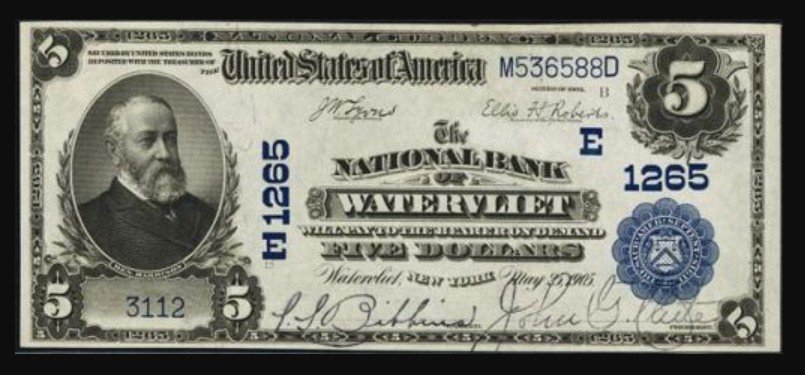
Large-size notes were printed before 1928 and are among the most collectible U.S. banknotes.
Depending on condition and rarity, many sell for:
- $100 to $1,000+
- Rare examples can exceed $5,000
Collectors especially seek Treasury Notes, Silver Certificates, and National Bank Notes.
1928 Red Seal $5 Bill
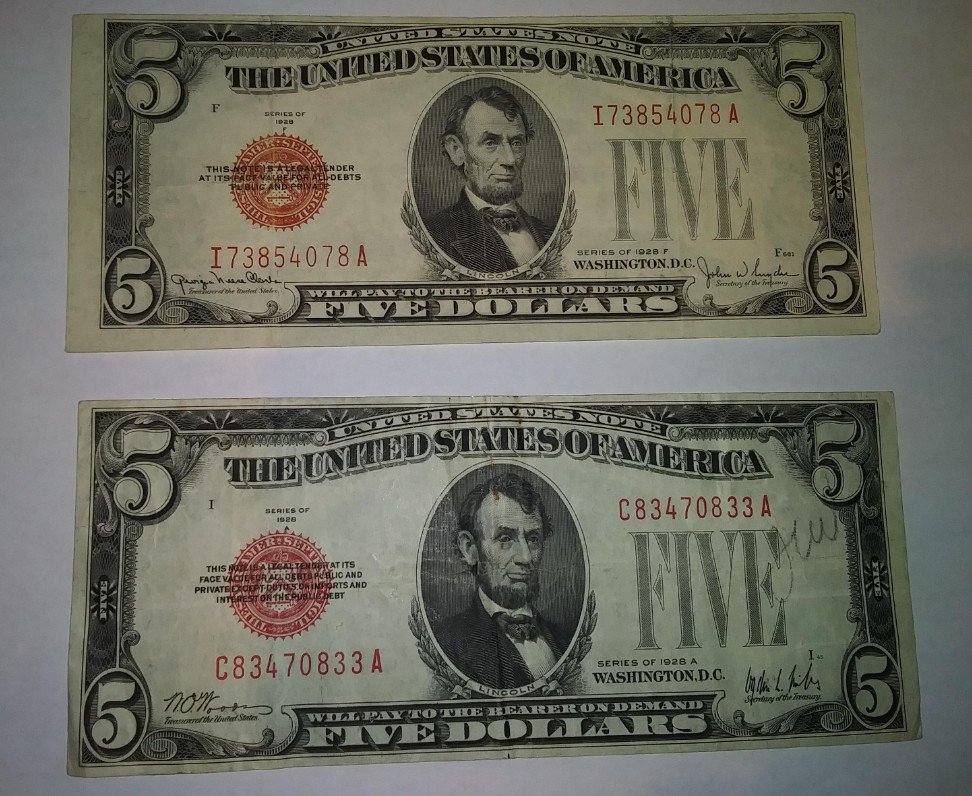
The 1928 Red Seal $5 bill is one of the most popular collectible notes.
Typical values:
- Circulated: $15–$75
- Uncirculated: $100–$500+
Star Notes and fancy serial numbers can increase the value significantly.
1953 Red Seal $5 Bill
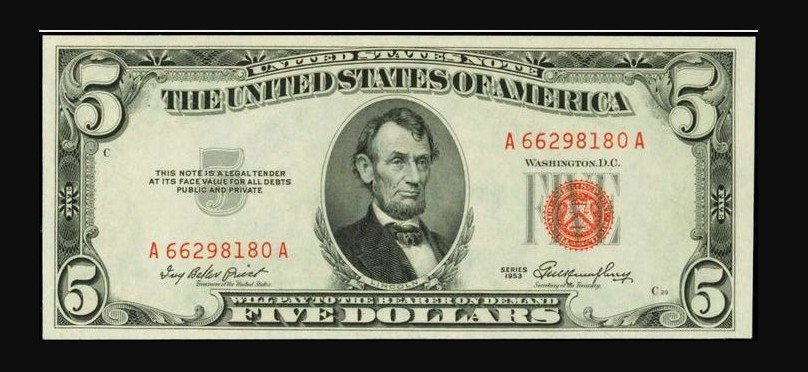
The 1953 Red Seal note remains a favorite among collectors.
Typical values:
- Circulated: $10–$30
- Uncirculated: $40–$150+
Bills with crisp paper and bright red seals command the highest premiums.
1963 Red Seal $5 Bill
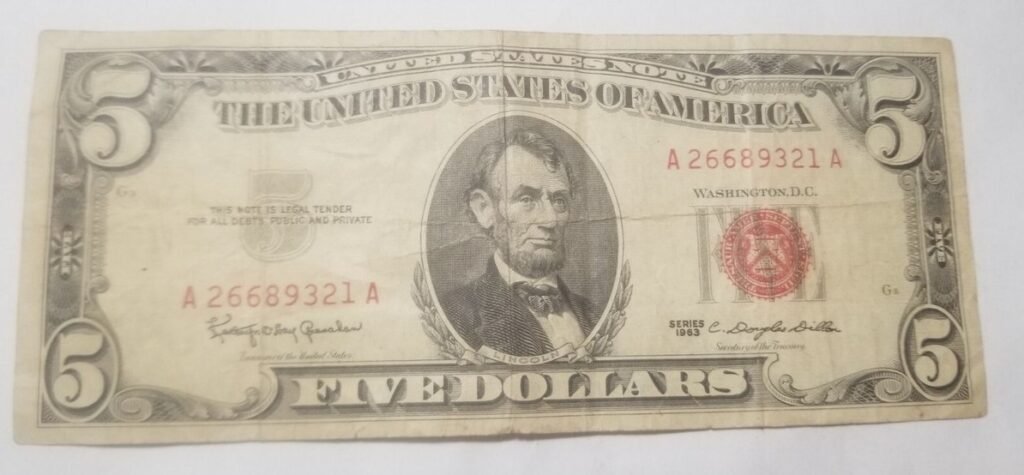
The 1963 Red Seal note was one of the final United States Notes issued.
Typical values:
- Circulated: $10–$40
- Uncirculated: $50–$200+
Well-preserved examples are highly desirable.
What Is a Star Note?
A Star Note is a replacement note printed to replace a damaged bill during production.
Instead of ending with a letter, the serial number ends with a star symbol (★).
Example:
A12345678★
Because Star Notes are generally scarcer than regular notes, collectors often pay premiums for them.
Valuable Serial Numbers
Some serial numbers are worth far more than ordinary bills.
Collectors look for:
- 00000001
- 00000010
- 11111111
- 12345678
- 87654321
- Radar Notes (12344321)
- Repeater Notes (12341234)
Fancy serial numbers can make even a modern $5 bill highly collectible.
Red Seal vs Green Seal
Red Seal Notes
Red Seal notes are older United States Notes.
Popular examples include:
- 1928
- 1953
- 1963
These are usually worth more than face value.
Green Seal Notes
Green Seal notes are Federal Reserve Notes.
Examples include:
- 1988
- 1995
- 2001
- 2006
- 2013
- 2017
Most common examples are worth only a small premium unless they contain rare serial numbers.
Printing Errors That Increase Value
Error notes can be extremely valuable.
Common errors include:
- Ink smears
- Misaligned printing
- Missing seals
- Offset printing
- Cutting errors
Major errors can sell for hundreds or even thousands of dollars.
How to Check If Your 5 Dollar Bill Is Valuable
Follow these steps:
- Check the year.
- Look at the seal color.
- Examine the serial number.
- Look for a star symbol.
- Check the overall condition.
- Search for printing errors.
These simple checks can help determine whether your bill is worth more than face value.
Frequently Asked Questions
Is an old 5 dollar bill worth money?
Yes. Many older $5 bills are worth more than face value, especially Red Seal Notes and large-size notes.
Are Star Note $5 bills valuable?
Many Star Notes are worth premiums over face value, with rare examples selling for hundreds of dollars.
What is the rarest 5 dollar bill?
Some 19th-century large-size notes and rare National Bank Notes are among the most valuable and sought-after $5 bills.
Is a 1963 $5 bill valuable?
Yes. Most examples are worth more than face value, especially in uncirculated condition.
How much is a 1953 Red Seal $5 bill worth?
Depending on condition, many are worth between $10 and $150 or more.
Final Thoughts
The answer to “How much is a 5 dollar bill worth?” depends on its age, condition, rarity, and serial number.
While many modern bills are worth only face value, older Red Seal Notes, Star Notes, low serial number bills, and error notes can be worth significantly more.
Before spending an old $5 bill, take a closer look. You might be holding a collectible piece of American currency worth much more than five dollars.